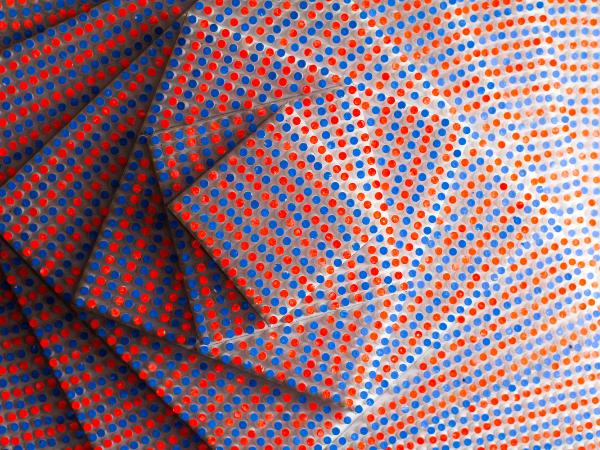
Will Hanlon - 3D Push Pin Art
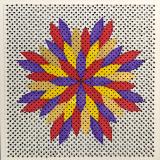
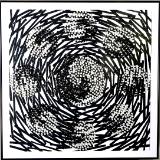
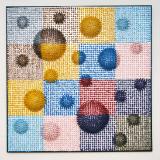
Artist directory :: Will Hanlon - 3D Push Pin ArtTwo elements – a visual, 2-dimensional design and a physical, 3-dimensional terrain. Employing push-pins for points of color on a multi-surfaced canvas of things sometimes found.
About
Will Hanlon is an emerging artist, originally from Lincoln, Nebraska where he developed skills in Music, Theater and Art throughout school. Later in life he embraced Push Pins as a material for art forms employing abstract pointillism. He now resides in Peekskill, NY in a private studio gallery and has shown at various venues and placements.
I strive to have a balance in my life. In my Art, I use push pins and other materials to create works. I start with a visual framework –a sense of order. Then chaos is introduced, either in balance or heavier to one side. Each piece results in the visual duality between. It is a balance on a spectrum, much as it is in our own lives.
Galleries
 | | 38 items |
 | | 21 items |
 | | 29 items |
 | | 23 items |
 | | 40 items |
 | | 134 items |
 | | 10 items |
Blog
2023 Peekskill Open Studio - Introhttps://www.instagram.com/p/CsJwo_uAkZl/
Peekskill Open Studio - June 1-2
I am thrilled to celebrate my 2nd year in Peekskill and opening up my gallery for the Open Studios on June 1-2. The Mayor's office has created videos of some of the artists.
River Front Gallery - Opening Reception
Three of my pieces were selected for a juried show at the River Front Gallery in Yonkers, NY. The opening was on 11/1/18, with more receptions on December 6 and January 3. The theme is Objet Trouve', or "found art." Works made of everyday materials and objects not usually used in works of art.
Evolution Gallery - Peekskill, NY
Walking down Main St. one recent morning, and came across a new art gallery opening up in Peekskill - The Evolution Gallery. So went inside and met the owner, Evelyn Lee, who expressed a great deal of interest in my work.
Peekskill Open Studios 2018
Racing to the finish line - relocating all of my art to my new studio in Peekskill in time for the Open Studios Festival where the local artists open their doors to the public. Great turnout and even a few sales. Most of all, made the space ready for private showing anytime going forward.