| 1/16/14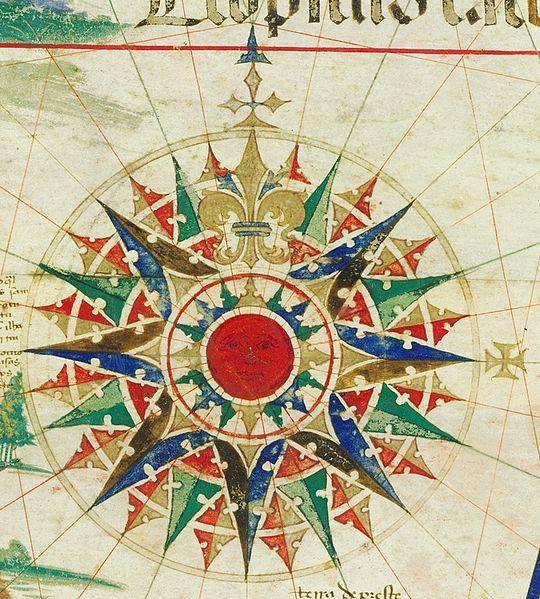 |
An inveterate daydreamer, I’m excited by
names bearing magic. “The Seven Seas” is a phrase which has been used by numerous cultures to
signify different locations both geographical and imaginary, the first recorded
use being Sumerian in 2300 BC. Since
then the sailing of various seven seas has been documented by voyagers
worldwide. Some authors diligently
recorded their experiences, fraught with pirates, wars, wild animals and
strange customs. Others used high
imagination to embellish their tales.
Sources I have read are medieval European and Islamic. I travelled down my own voyage of discovery,
uncovering beautifully shaped sailing vessels, intricate sailors’ maps, and
legends which shape shift from one location to another.
In the ninth century AD al-Ya’qubi listed the seven seas which formed
the maritime trade route from the Persian Gulf to the South China Seas, and I
took the names and characteristics of these waterways as the impetus for this
series. In the 1300s Ibn Battuta, a
Moroccan Berber best known for his book of travels, spent thirty years
wandering the globe from Africa to China.
He wrote copious observations on his 75,000 mile journey throughout the
Muslim world, laden with adventures.
John Mandeville was purported to be an English knight, whose remarkable
collection of anecdotes was probably a potpourri of tales embellished by his vivid imagination. The book was originally
published in French in 1356, and was hugely popular throughout Europe, being
treated as a work of reference. It
appeared in English in 1375.
Plants which sprout tiny lambs, dog-headed men wearing rubies, castles
which vanish at sunrise, dragons, cockodrills and basilisks. Giants, fairies, djinn and devils. Women with eyes of diamond who burn their
babies. Great birds that carry off
elephants, and trees which bear beautiful but ephemeral women; speaking puppets
and oracular snakes.
What more could a daydreamer want?
|
Be the first to post a comment.
|
1/16/14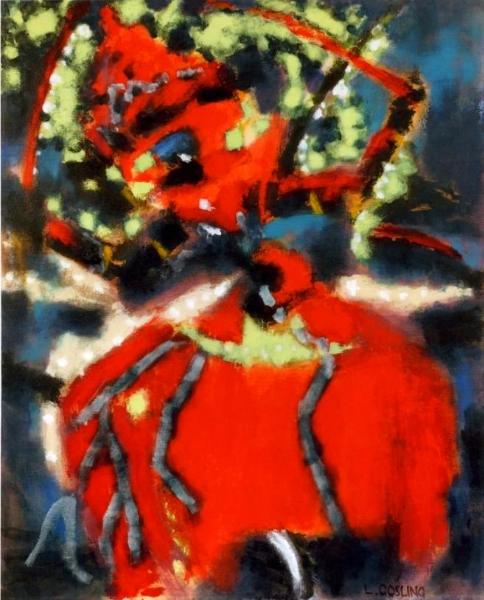 |
I had never heard of Theyyam when I visited the Malabar Coast of
southern India, and happened upon its annual performance. It is a religious ritual originating in
Neolithic times, long before Aryans from the north invaded and brought Brahmanism
to the area.
I stayed with a Theyyam expert who took me to several performances both
public and private. Since then I’ve
read as much as I can about this inspiring event.
Dravidians, the original inhabitants called Untouchables,
perform Theyyam; it is seen as a
family obligation. Brahmins and aristocrats have kept lower
orders in their place over centuries by encouraging this.
The performance can continue for three days. On the first night the song is recited to
beating drums. Meanwhile the dancer takes
up to ten hours to get into costume, makeup and
mood. On donning the headdress he
actually becomes the deity and dances before the shrine. At the end of the dance he distributes rice
and turmeric, giving blessings and predictions to his devotees.
These rituals traditionally take place in sacred forests called
‘Kavu’. The Dravidians used to be
denied entry to the Brahmin temples, so created their own sacred groves. Nowadays, with increasing development, many
of these spaces have disappeared, only the shrine remaining, and now this
ancient form is in danger of dying out.
|
Be the first to post a comment.
|
8/24/13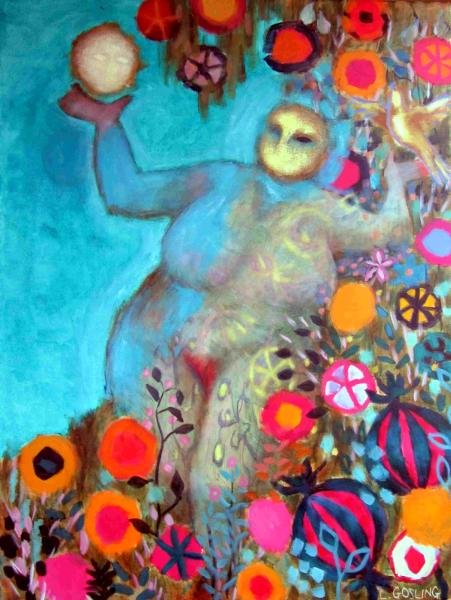 |
I
talked at the Headingley LitFest about some of the female forms
in my work. My work has always been driven by my fascination for ritual and
mythologies from all over the world, because of my very mixed heritage and
travels.
I am currently interested in tales of the Seven
Seas. These are adventures, real and
otherwise, from medieval merchants and seamen from Europe and the Middle East.
They explored dangerous trade routes through often uncharted seas, and
documented miraculous and diabolical sights en route.
‘Pomegranates’ was inspired by various myths
concerning women, as recounted by lonely, long-distance sailors, and found in
places as far apart as Japan, China, Persia, and Europe.
The Island of Women is a mixture of legends, formed by
male lust and fear. These women would
either fight shipwrecked sailors, or mate with them till the exhausted seamen
died. In some cases women procreated by
looking at their own reflections, or by being impregnated by the west
wind. Sometimes the women lured sailors
with their beauty, only to become horrifically ugly once the men had been
caught and bound.
I’m interested in the power held by these women, and
the fertility often expressed in these stories.
My goddess/woman stands
alone and self contained with her symbols amidst lush vegetation. Her
transparency makes her at one with the vegetation. Stylized pomegranates
appear, based on old Turkish designs and signifying fertility.
|
Be the first to post a comment.
|
|
|


